
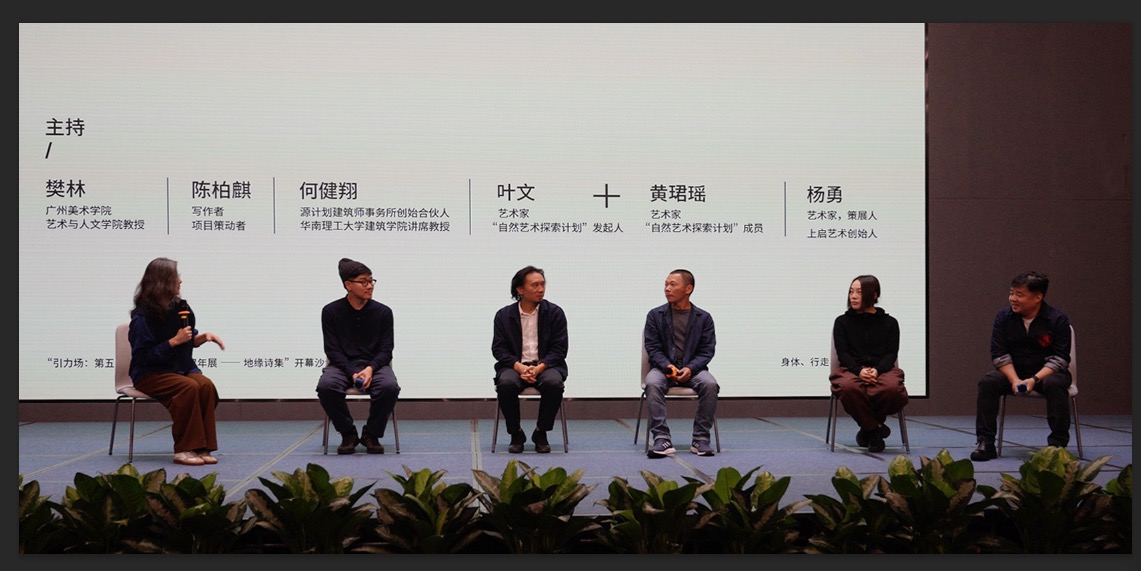
On November 18, 2023, “Body, Walk and Cultural Imagination”, the theme salon of the 5th Shenzhen Biennale of Contemporary Art, was held in the 1st-floor conference hall of Dafen Art Museum. Moderated by Fan Lin, Professor at School of Arts and Humanities, Guangzhou Academy of Fine Arts, the salon invited four guests – Chen Baiqi (writer and curator), He Jianxiang (Founding Partner of O-Office Architects and Chair Professor at School of Architecture, South China University of Technology), Ye Wen (artist and initiator of Nature Art Exploration Program) and Huang Junyao (artist and member of Nature Art Exploration Program) – to share with the audience practical experience about body, walk and locality. The event was briefly introduced by Yang Yong, curator of this year’s biennale, and then moderator Fan Lin related to what she saw and felt during her first visit to Dafen Village as a lead-in to the sharing afterwards.
The following text is extracted from the content of the salon, edited and organized by the exhibition team and reviewed respectively by the moderator and guest speakers. The pictures in use are all approved of by the moderator and speakers.
The Introduction of a Question
Fan Lin: Where Is the Localness Located?
This is my first time here in Dafen Art Museum, and I find that only when you feel it physically will you know what Dafen Village or Dafen Art Museum is. On my way here, it hit me that the word “Buji” (Editor’s note: Buji is part of Longgang District, Shenzhen, and Dafen Village is part of Buji) seemed quite familiar to me for a time, but I’m sure I hadn’t been here before. A while later I recalled that a dormmate of mine had been assigned to a primary school in Buji for special reasons after graduating from Sun Yat-Sen University. The school haunted the envelopes as an address for the letters we wrote to each other for perhaps ten years, so I suddenly realized that the term is in the depth of my memory but I just hadn’t been here before.
Upon arrival at the village entrance, I got out of the car for a walk around and found many sights. For example, I saw such a slogan: Painting is all we are capable of. Many painters in the world would say it, but, when the shop keepers in Dafen Village say it, they are rectifying what we make of the concept of art.
Today, as a matter of fact, what our guests and I try to do through talks is fill in some blanks of ours and give an account of a change in history by revisiting the physical space and observing and learning about different ways of working and thinking, and we also hope to fix social relations by discussing some concepts. We put emphasis on the body because it comes first in contemporary art from the start. From simply the dimensions and medium of a work to more complex issues including patriotism, space, physics, history and society, all of these have to do with physical experience.
Over these years, as an observer, I also want to learn about and be enable to describe the art ecosystem of the big region where we live. So, I’d like to introduce my first question here: Where is the localness located? “Localness” means the state of being local, in which “being” could be a traditional concept in China or a concept in Western philosophy, so, when we are being somewhere, what languages and thinking should we employ to really be “local”?
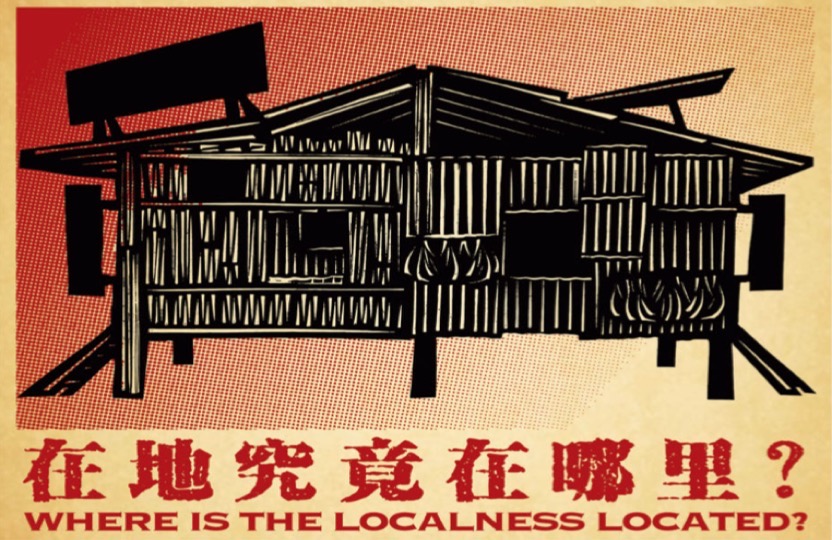
Where is The Localness Located?, Question Squad: Liu Qingyuan × Fan Lin, visual design: Guo Tutu
About Fan Lin
Fan Lin is a professor at School of Arts and Humanities, Guangzhou Academy of Fine Arts, art critic and curator. She’s dedicated to teaching, research and writing on Western art history, and her study of “German neo-expressionist painting” earned her the chance of an academic visit to Germany as a member of China Artists Association’s overseas study program. She has been invited to curate exhibitions and give lectures in Australia, Hungary and Germany, and was commissioned as an observer for the 6th Momentum Biennial in Norway. She once served as an academic committee member and section curator of Lianzhou International Photo Festival, a section curator of Shenzhen-Hong Kong Bi-City Biennale of Urbanism\Architecture, a preliminary judge for Award of Art China, a council member of Pingshan Art Museum and an Academic Committee member of the 7th Guangzhou Triennial.
Excerpts from the Talk
Chen Baiqi: The Body of an Observer, Inhabitant and Doer
Apart from doing research and writing, I’m also serving now in Kwan Teo, a non-profit institution based in the Chaoshan area, which I founded in 2015 with friends to incubate and present projects such as an independent regional film festival and travel-related projects. During my research, I always try to understand what my body really means and why I have to devote my body when I connect to an object, a person, a space or environment.
Over the last four or five years, I’ve been researching a vernacular kind of Western-style buildings in the Chaoshan area, or Yanglou as is locally called, structures built in the late Qing dynasty around 1870 that combine Western and Chinese elements. In 1939, the invading troops of Japan landed on the region, which basically put an end to the construction of such buildings. Typologically, the odd-looking houses built in the short span of 70 years locally by Teoswa people or where they migrated to may follow some colonial styles, such as the Late Victorian style, but most of the time we can only study the remainder for the then influence of cosmopolitanism on Teoswa people and how they perceived and acquired these things in their drifting life and brought them back to the hometown.
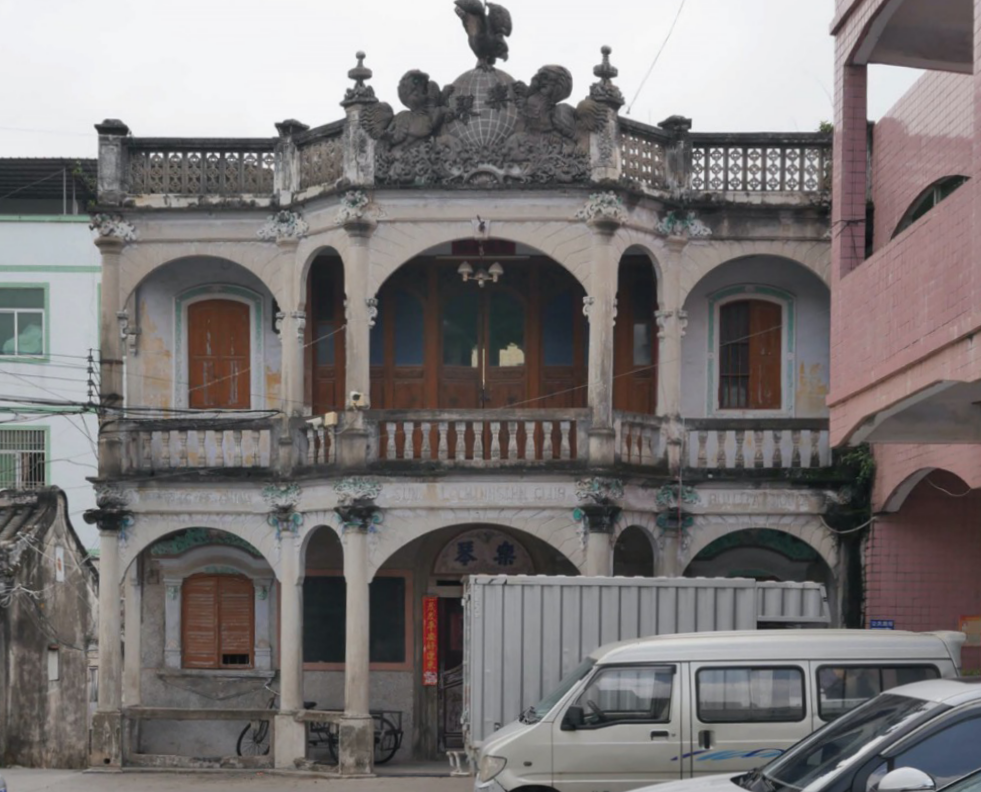
Yanglou built between 1887 and 1939
Most of these buildings are now hidden in rural areas, so, for the past four years or so, I could only investigate by foot and by asking around for directions with my mouth. No record or informant can tell the whereabouts of the houses, so I had to search villages one by one for later discovery, identification and recording.
Prof. Fan Lin just mentioned what the “localness” is, and, when I was doing this research, the first question I had for myself was: What is this place?
In 2019, perhaps, I made a film, and, to make it, I kept wandering around Zhanglin to see, find and understand the role the buildings play today. In fact, regardless of their role today, as long as they exist, they still contain a lot of relationships that haven’t been broken off, like a relation in Singapore may know he still has an old house back in his hometown and people on this side may still miss their families in Thailand or Malaysia. Once every such house is gone, its share of these actually existing relationships will also come to an end, so, from my point of view, these houses are very important containers of relationships and, in the past, they certainly were also carriers of family relationships or a main solution to family problems.
I tried to understand the phenomenon of Teoswa people leaving their homeland in great numbers from that period and from this port of Zhanglin, settling down at the furthest possible places they could reach, and then returning one after another after about 100 years to see and live in this place the way I do. That is what I was doing in 2019 and 2020.
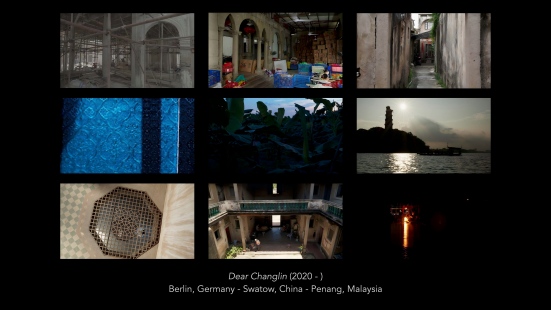
Dear Changlin, film stills
Later I realized that not only did I want to see the buildings, but I also cared about the people who live inside. So, after I got to know many elderlies who lived in these houses, I picked one of them as the subject of my long-term interview. But then, last year, I realized anew that, no matter how I look at the houses or how frequently I contact people who live inside, I cannot really get into and understand the houses. So, from November last year, I started to live in a long-abandoned house I had found and tried to live the way our forefathers used to.
From living in a house to connecting to some people and then understanding a place, I also started to realize that this place is actually like a river or drainage basin that is linked with everything else in the form of various ravines. I was wondering for a time what our Han River basin or Chaoshan Plain is really made of, what it was like in different periods in history, how our ancestors traveled from mountains to the coast, what paths they took about 100 years ago and what boats they sailed.
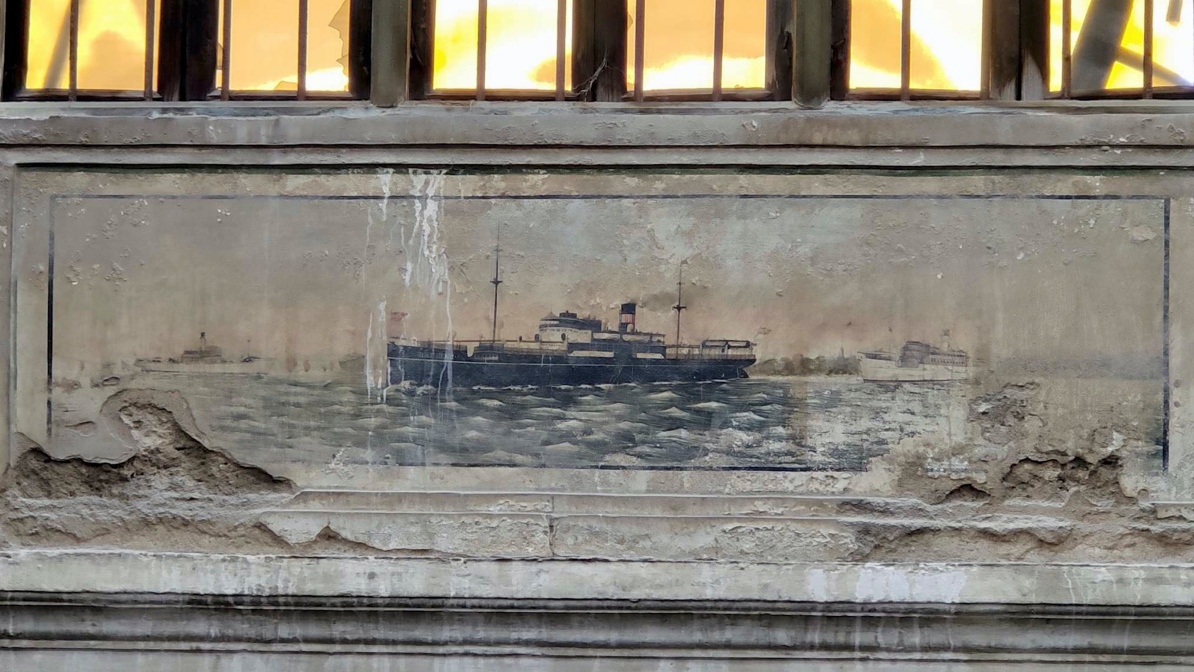
A mural in an abandoned Yanglou
In July 2022, I decided to carry out a project called “The 29th Time to Cross the River”. It takes seven days to travel from Meizhou to the Han River estuary on foot. It’s a journey of over 200 kilometers, where there are a good many chances to cross the river, mostly bridges and boats, such as fishing boats, shell catching boats, ferries, cargo ships and cement carriers. And, in this process, I was thinking about why I had to do this. The way I see it, the continual moving or traversing of people from a place, the Chaoshan region or elsewhere, is actually distancing them from something, and that’s when they would start to know those things and ask about them, which is equal to asking where they are from and who they are. Such a to-and-fro process can help affirm over and over who they really are and where they are originally from, so that they can understand and be sure of their identity step by step.
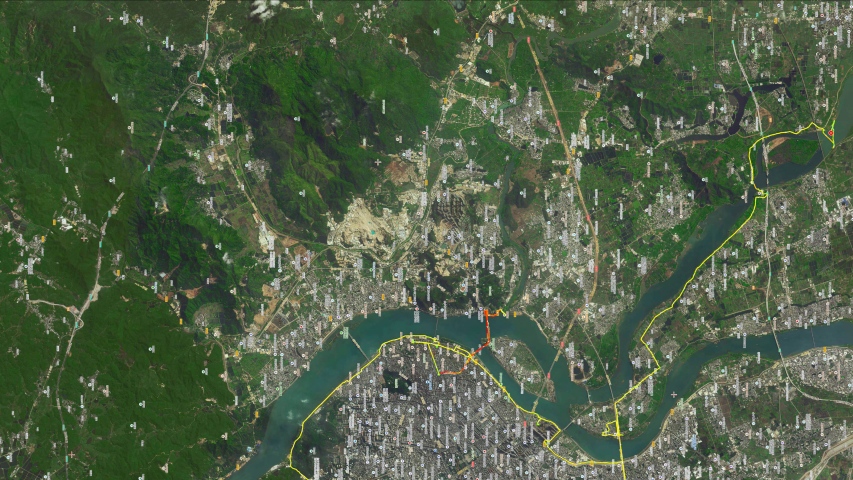
The Chaozhou section of the Han River, the yellow line for the walking route at the time and the red one for the river-crossing route
I also walked this year, did something similar and visited some other places too, but this walk has brought me very important experience. It was a route I had traveled ten or at least eight times by car, but only when I walked on it and visited one village after another did I start to realize what the mountains and river really look like, how people live along the river and how they get from here to there. None of these are as what they are meant to be as we have imagined.
The way I see it, how we engage is particularly important. I always believe that those houses were built that way for a reason. The source may be our understanding or imagination of something, which generates some meanings, and the meanings are passed down and lead to the accumulation of something, embodied by such houses. So, to step into and live in the place and then understand it is but the beginning of everything. A beginning that is always necessary even though there is still a long way to go. This is what I’d like to share with you guys – the necessity to place the body in real space.
About Chen Baiqi
Born and raised in Chenghai, Guangdong, after graduating from Hong Kong Baptist University, Chen Baiqi received a dual master's degree in Modern Art History and Art Administration from the School of the Art Institute of Chicago in 2019. He is currently a PhD candidate researching architectural anthropology at the School of Architecture, Royal College of Art in London. He is a writer, curator and documentary filmmaker. As an art project curator, he worked successively with Hong Kong Arts Festival and at the Art Institute of Chicago, Shenzhen OCT Contemporary Art Terminal and the OCT Innovation Research Institute in Shenzhen. To promote vernacular film art is a key part of his art curatorial work, so he cofounded Teoswa International Film Art Festival in 2015 with his friends to screen Teoswa films from China and abroad and has maintained it through tough times.
He Jianxiang: The Bodiliness of Creations, Scenery and Architecture
Architecture is not as individualized as art and it defies all metaphysical thinking as what it faces everyday is all sorts of concrete needs. Based on this, my requirement for myself as an architect or for my students whom I teach architecture is that you must do deeper thinking over the state of everything built around you or find the origin of it. From my point of view, the first question to think about is: Why would our cities and spaces develop to their current state, or what’s the origin of such a state?
First of all, the relationship between scenery and objects.
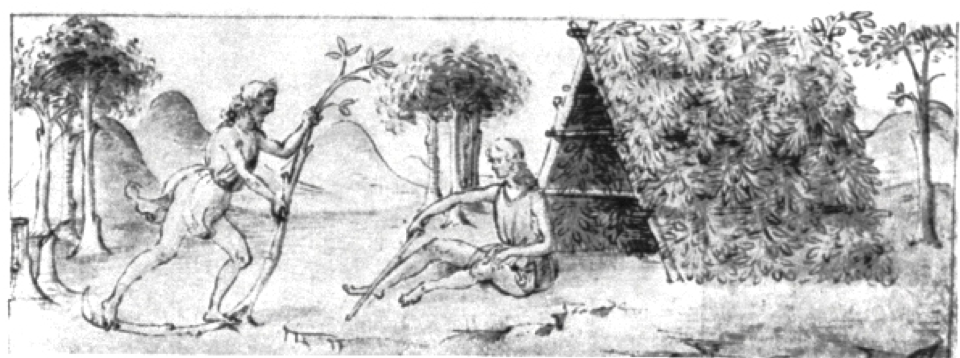
Trattato di Architettura, Antonio Averlino Filarete; image from the Internet
I believe that, in earlier times, we didn’t separate scenery from objects. Every object we saw was scenery and all scenery was objects we encountered. But soon, we began to use materials to build, construct or create things. And, after we began creating things, among artifacts, architecture is the type that is the most complicated or largest in size and involves the most comprehensive social organizations. So, this actually also separated our living or survival space from nature outside. This separation became more obvious with the complication of our tools and objects, and greatly intensified the subjectivity of mankind. And, thanks to the efficiency brought by the later Industrial Revolution, humans have learnt to use or manipulate the solar energy the earth absorbed in the past and turn it into productivity, which means that the way of producing and constructing architecture and space with human labor has in fact been obsolete in cities. Then, in this age of modernism, the invention of large-scale machines and tools has actually detached architecture from its original relationship with the human body, given that most of it is currently produced through large-scale mechanization and standardization. In a modernist city envisioned by an extreme yet famous German modernist architect Ludwig Wilhelm Gilbert, the coexistence between cities and villages or between artifacts and scenery in an opposite relationship is completely replaced by tool-ized artifacts.
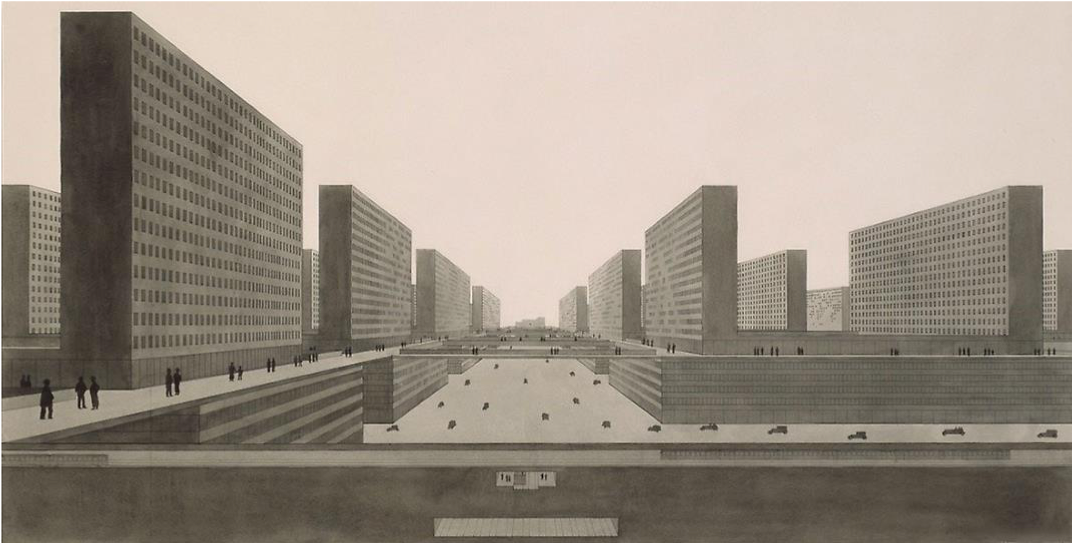
Hochhausstadt, Ludwig Wilhelm Gilbert; image © Art Institute of Chicago
Based on this, as production continues to develop, we’ll have what Guy Debord calls a “society of the spectacle”, composed of everything we produce, the information disseminated that describes the things or the expectations of things in the future. Scenery is not only the outcome of production but also the condition necessary for the following production. Everything we see, possess and imagine is included or covered by the so-called society of the spectacle.
In Chinese tradition, however, artifacts and nature are separated not so obviously as in the West, but always stay in an opposite relationship. Our houses, spaces and objects actually maintain an organic relationship with natural sights all along. Even when it comes to the size of our cities, nature and artifacts are not completely separated, but always intertwined organically – this is the tradition of our cities. But, sadly, as we all know, modern production, since it was introduced regardless or without reconsideration, has greatly changed our cities, villages and everything in our life, which means that our work and life are all wrapped in standardized squares, units or products one after another and that it’s basically impossible for them to connect with land or nature any more.
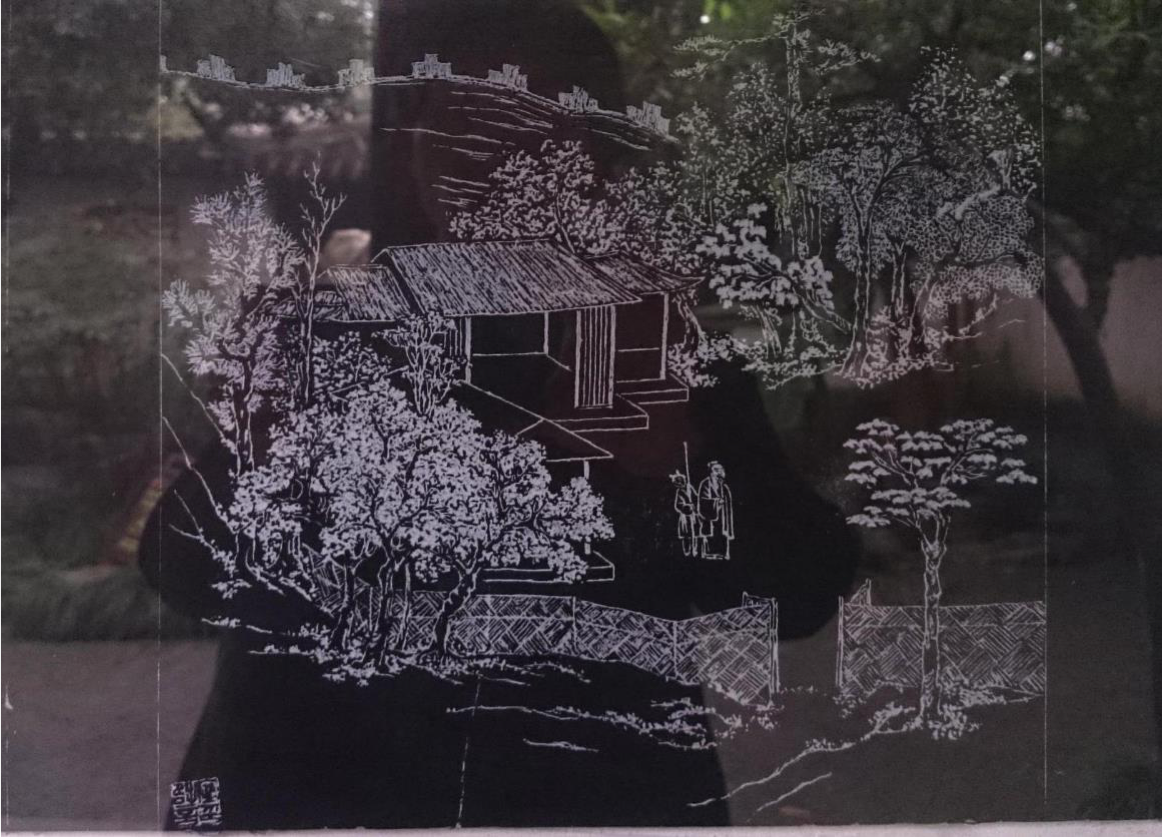
Scenery in Chinese traditional imagery
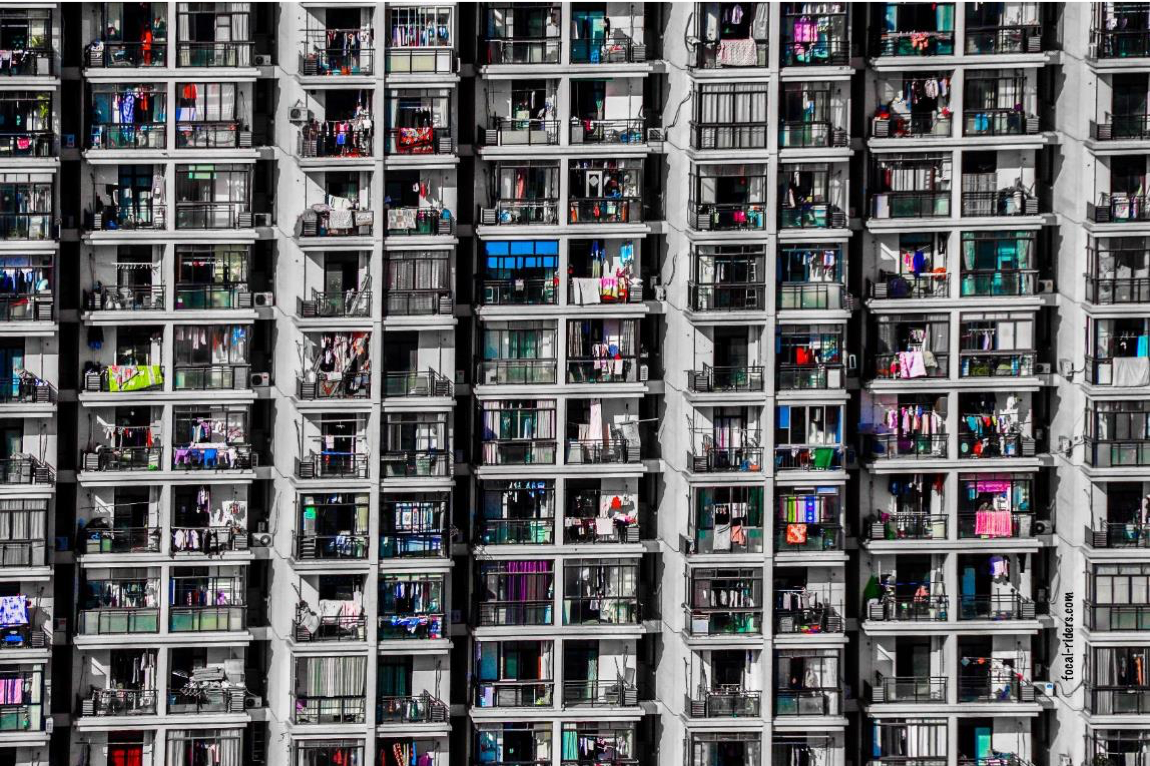
Den(c)ity, Régis Jouvinier; image from the Internet
Raised in a Cantonese-speaking region, I have a real complex about what our native place was like in geography in the past, but, in the meantime, this place faces a sharp rise in the need for spatial production, which forces us to think about how to deal or cope with it. The several collaborations between us and Guangdong Times Museum in the spatial design of exhibitions are fruits of consideration in practice.
The urban-rural fringe area where Times Museum is situated has a variety of fabrics: urban villages, scattering industrial premises, new residential communities, new property developments and so on, which became sharable, readily available material for artists for an exhibition about nine years ago. We placed about ten pieces of art in a conceptual space called “gallery street / street gallery”. We transplanted all the objects previously from or based on the city, such as the sidewalk tree, stainless steel four-wheeler, arched door, alley and some modified objects, to the “street” space inside the exhibition hall of the museum. During the exhibition, the museum also organized a number of public activities, including square dancing and collective yoga courses, directly in the “street”.
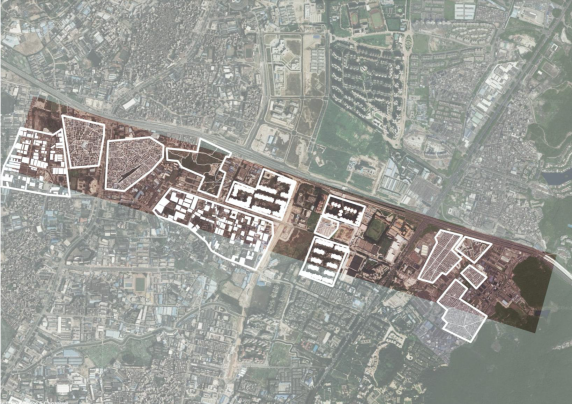
A fabric collage of the city
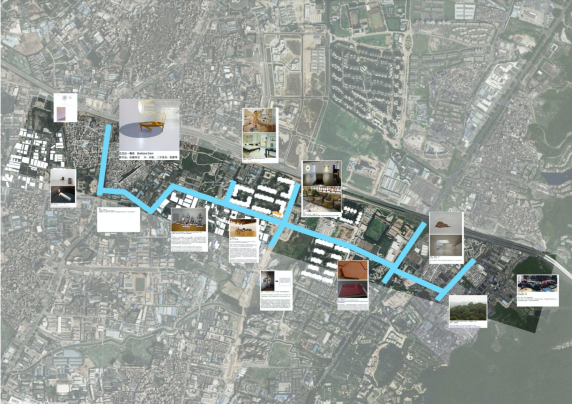
An art museum as a city?
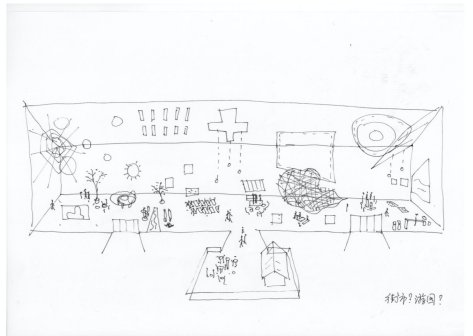
Street gallery
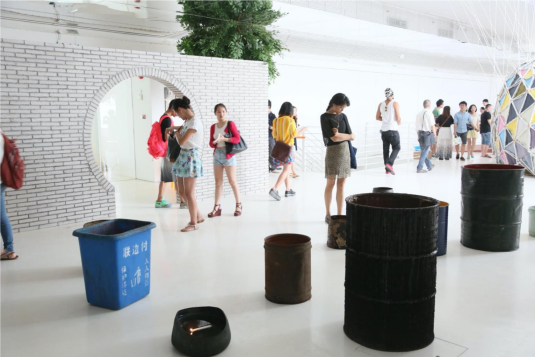
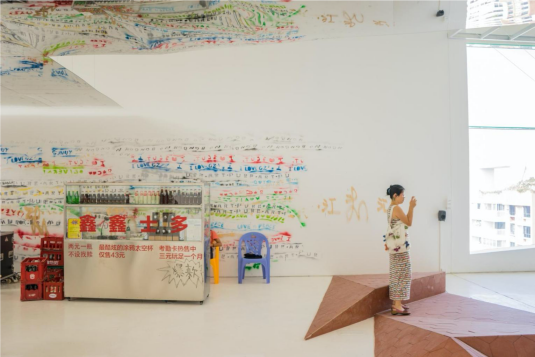
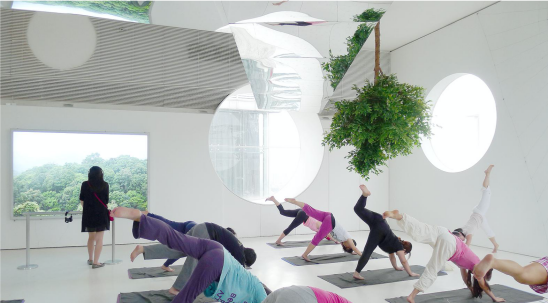
Exhibition Views of You Can Only Think about Something if You Think of Something Else in Times Museum, He Jianxiang / O-Office as the spatial designer
After this project, we continued our cooperation on another exhibition, Uselessness as Usage – Operation Delta #4: Architects in Action. Considering the exhibition’s exploration of the relationships between man and space, cities and the environment, during the pandemic at the time, we discussed online with two invited architects, respectively from Japan and Europe, for the ultimate form of the exhibition – a maze built in Time Museum’s oblong exhibition hall. The maze was realized by using a very rough kind of hollow bricks to divide the oblong space into triangular cells of different sizes, in order to give visitors a certain sense of loss which made the space acceptably oppressive. And, outside the maze, we felt that the visitors, after experiencing the semi-enclosed environment, would need to escape in some way, like going up or climbing higher for, perhaps, a final jump to release the suppressed part of their emotion. So, we also designed a structure called Delta, made a few and placed them in the glass-box exhibition space of the museum. Delta is actually a letter in the Greek alphabet, and represented by a triangle (Δ) in geometry.
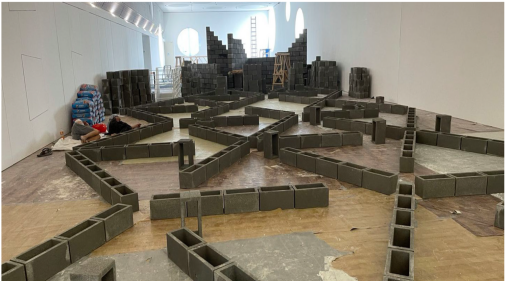
Construction site of Uselessness as Usage – Operation Delta #4: Architects in Action in Times Museum; Maze, He Jianxiang/O-Office
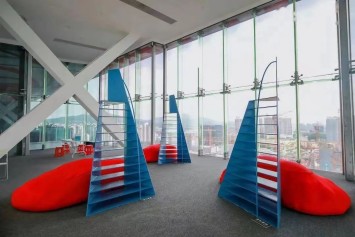
Exhibition site of Uselessness as Usage – Operation Delta #4: Architects in Action in Times Museum; Delta, He Jianxiang/O-Office, image © Times Museum
Our maze, the name of this structure and its shape were all echoing the project “Operation Delta”. Ultimately, we hope that we can put some of our thinking into practice and even inspire more people to think about these questions.
About He Jianxiang
He Jianxiang is a Founding Partner of O-Office Architects and Chair Professor at School of Architecture, South China University of Technology. In 2007, he returned to Guangzhou after years of study and work in Europe and co-founded O-Office Architects with Jiang Ying, embarking on a career in independent architectural design and research in southern Chinese cities. O-Office Architects is interested in integrating diverse cultures and values with regional architectural practices. Urban renewal and re-intervention of collective living forms are the recent focus of O-Office’s work. Its experimental regional practice has won important architecture awards both in China and abroad, including RIBA 2021 Award for International Excellence, Gold Awards of ARCHASIA 2020 and 2022, the Architecture Award of the 1st City for Humanity Award in 2020, Highly Commended in AR New into Old Awards in 2017 and nomination of the BSI Swiss Architectural Award in 2016.
Ye Wen, Huang Junyao: Body, Nature and Imagination
Ye Wen: Most of what happened in the past three years have upended our previous perceptions of the world, which we thought were solid, as well as our ways and angles of looking at people or objects. It was probably in March this year when I came up with some ideas, thinking that I should try a different approach to my work or find some new possibilities that steer clear of the established system of art. In reality, I needed to get out of the current plight and the society-wide suffering. My personal growth experience and my reflection on the current situation of art filled me with a longing to go back to where art started, nature or the wilderness.
As the initiator of Nature Art Exploration Program, I invited four artists, who and I have all lived in Shenzhen for over 20 years. Our approach to work has three most important characteristics. First of all, we don’t plan beforehand: before stepping into nature, we don’t predict what we are going to do today or what we can accomplish. Second, our communication with the invited artists won’t cover anything definite about each other’s creation, but, like the roots of a plant that grow separately, we have no idea of what each other is doing or what each other can accomplish. The last one is a point I’d personally like to stress: we don’t do sociological research. Two pieces of mine were implemented in Wutong Mountain, Shenzhen. In one of them, I collect a random stone from the water, hang it on a bough with a rattan I’ve found nearby, sit quietly by its side and aim my camera at it. The wind keeps the stone moving a bit into and off the water. Another piece was inspired by some of my kid’s very natural movements when I took him there. I recorded them and also invited some kids we had met in the mountain to beat the water. The tempo at which they beat it was also the tempo they wanted to express in that environment. What intrigued me are mainly two aspects: a) in a similar natural environment, the different body functions and emotional reactions of different people, and how they convey these reactions outwards; b) some short and subtle interference of the human body and action in time, space and the form of an object.
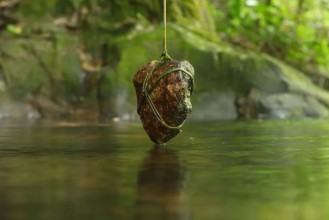
Work 2023-08-23-02, Ye Wen, video still
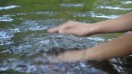
The Child Rhythmically Beating the Water #1, Ye Wen, video still
Gui Shijun, an artist in our team, is also inclined to rely back on the body and perception and to fully trust the body in her practice. As a foundation for learning about and communicating with the world, the body is both the subject and the object. When she reconnected with the world with her body, or a tool of perception, she also found a new self of hers. Li Zhengde, another participant of the program, is a conceptual photographer, who employed quotes from ancient scholars in a playful way. He found a couple of rocks in a mountain spring, drew his version of one of the Eight Scenic Spots of Wutong Mountain on a cliff, and took photos of it as a static work. Zhang Lihua, another artist, would often sit quietly at a place for observation or to draw or write something simple when she was out with us.
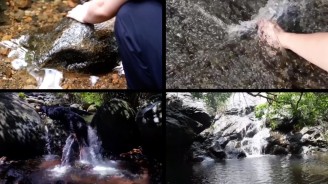
From top left to bottom right: Washing the Stone, Dividing the Water, Waterfall, Climbing the Waterfal Gui Shijun, video stills of performances
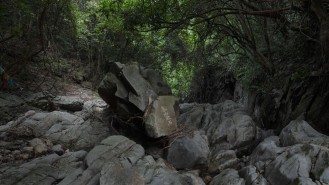
Gargling Rocks by Tanshan Stream, Li Zhengde, photography
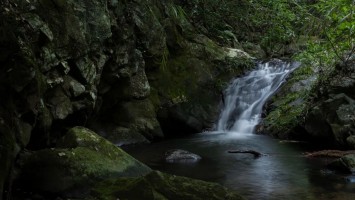
Pillow Creek with Peach Blossoms, Li Zhengde, photography
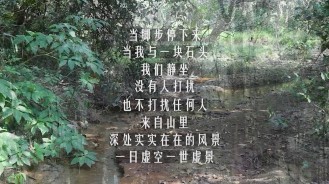
An excerpt from a poem composed in Wutong Mountain, Zhang Lihua
Huang Junyao: I also have a few pieces implemented in Wutong Mountain. One of them is Life, which originated from my hope to feel the undulation of flowing water at my chest as I didn’t feel good in my heart at that time, so I dry-fired the bow from the height of my heart when it was close to the surface of the water. Another one is The Appearance of Words, which is a one-minute series of action snapshots in the mountain. I was sitting on heels with most of my body hidden in the water and holding all of my clothes overhead with my hands. The piece embodies a theme I have been trying to explore: hiding in everything visible and invisible. During every Wutong Mountain action, we would find a wood stick or cut a section off a trunk as our hiking pole, which inspired my piece Going Down the Mountain. Such a stick of mine followed me along the route from Xianhu (Fairy Lake) down the Wutong Mountain all the way to an urban sidewalk and zebra crossing, so it documented the change in landform from the mountain to the city.
Two Trees is a collective performance piece staged in Sunrise Theater, Shenzhen Bay Park. Initiated by Li Zhengde, it features the activity of the four in our team “rolling on the lawn”, so I roll respectively from up two slopes to two trees to experience the fun of birds flying between trees.
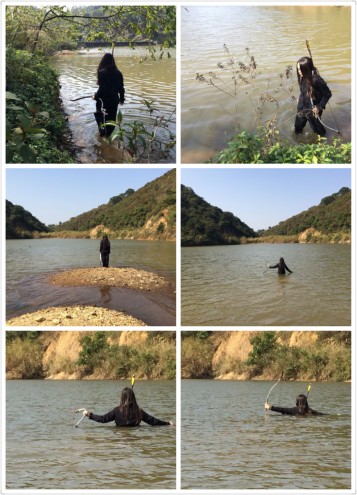
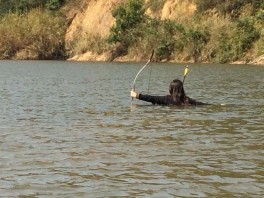
Life, Huang Junyao, performance photographs
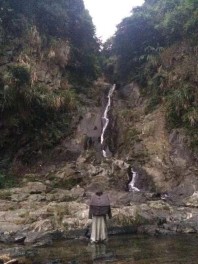
The Appearance of Words, Huang Junyao, performance photograph
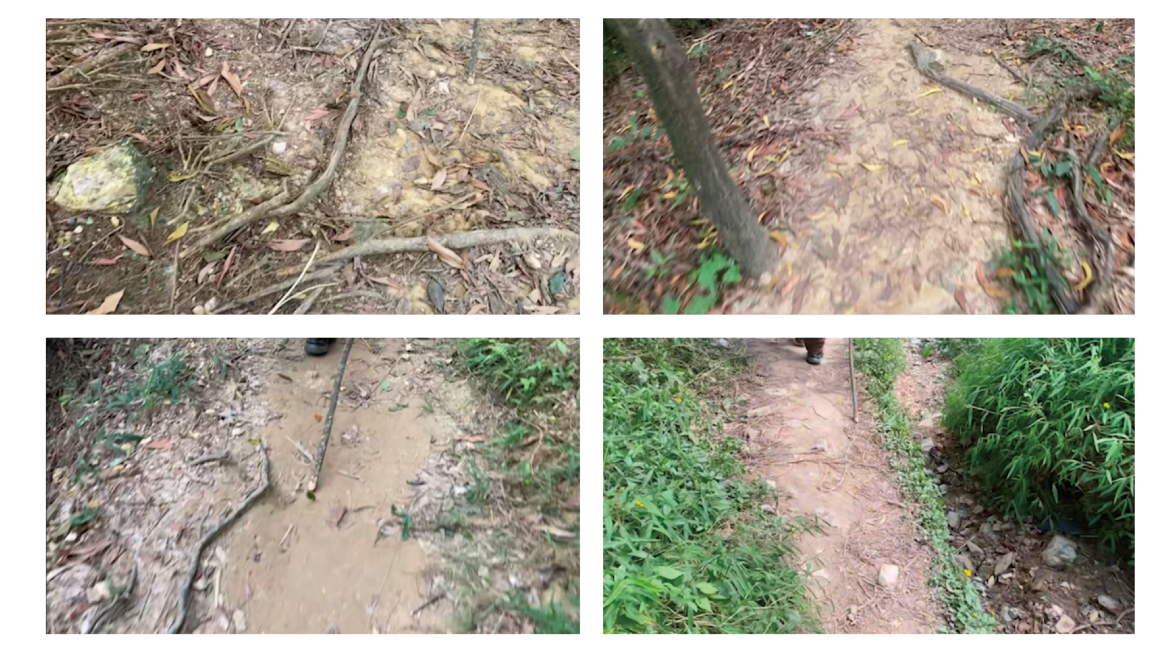
Going Down the Mountain, Huang Junyao, video stills of performance
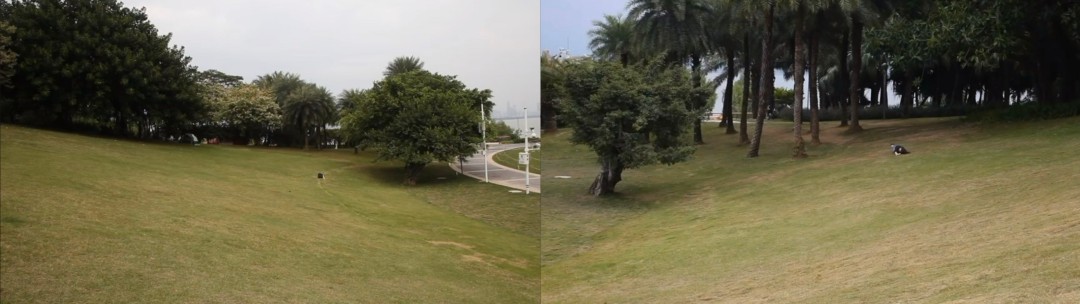
Two Trees, Huang Junyao, video stills of performance
Ye Wen: We have a principle for our work in usual times: we don’t carry tools basically except for any further need for shooting. Because carrying tools will predestine us for something, like the kind of thing we can do with a certain type of tool. So, we basically only carry the camcorder, camera and phone necessary for recording. Sometimes, we would also interact with some tourists we met, like asking them to do something purposeless and unpredictable.
Huang Junyao: As I see it, while nature is losing its primary archetypes, spirituality, mythological nature, etc. to AI spectacles, it’s urgent that the collective consciousness of humanity return to the origin, or to an area out of the control of the human will and virtual spectacles. We go into nature not only to respond to the call of nature as the ancient energy center for mankind, but also because we are part of the action network of partakers of natural elements. Returning to the body is quite a way to refine vitality with the body as the perceptive core of the natural channel, and the most effective way to stimulate “things” and nature with the dynamic and static forms of the body.
Ye Wen: Only when our identity gives way slowly can we gradually return to the body.
About Ye Wen
Ye Wen, Artist and Initiator of Nature Art Exploration Program. Graduated in 2007 from Chinese National Academy of Arts, Ye Wen currently resides in Shenzhen. His artistic repertoire encompasses painting, installation, video, and natural art. His work primarily delves into and documents the individual life experiences within the contexts of time, space, and specific environments. His creations have been featured in various prestigious exhibitions, including: The Shenzhen-Hong Kong Bi-City Biennale of Urbanism\Architecture at Shenzhen Nantou Ancient City, The 2nd, 4th, and 5th Shenzhen Biennale of Contemporary Art, The 2019 Contemporary Art Invitational Exhibition at Shenzhen Art Museum, The 6th Shenzhen Public Sculpture Exhibition at Shenzhen Public Art Center, The 1st, 3rd, 5th, 7th, and 9th Shenzhen Youth Art Week, among others. Ye Wen also hosted solo exhibitions and lectures at Shenzhen Art Museum in 2017, The Chinese University of Hong Kong in 2018, and Sen Space in 2020. His published books include "Time Archives: Ye Wen Works Collection" and others.
About Huang Junyao
Originally from Hunan, HUANG Junyao is currently based in Shenzhen. Her artistic creations span easel painting, performance, and installation art. Her works often explore the interplay between the body and nature, as well as the transition between mysticism and intellect, observing and perceiving the world through daily practices. HUANG's works have been featured in the Shenzhen Contemporary Art Documentation Exhibition, the Venice Biennale's Metaverse Exhibition, the Shenzhen Biennale of Contemporary Art, Shenzhen Artists Week, among others.
An avid researcher and practitioner in the field of mysticism, Huang specializes in Western modern astrology, classical astrology, and is a student at the London School of Astrology (LSA). She is a certified classical astrologer with the Chinese Astrology Association, a certified Reiki Master with the US ICRT (Usui Reiki), and a Shamballa Reiki Master with Australia's CASA. Additionally, she is an enthusiast in angel healing and Feng Shui studies.
|
TEL:0755-26655881 |
EMAIL:info@shangqiart.cn |
|